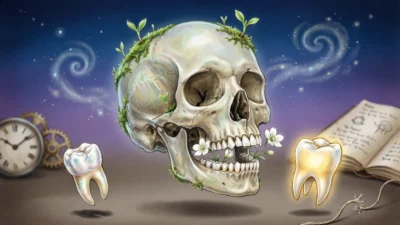

Have you ever woken up from a dream and thought, “What was that supposed to mean?”
Maybe you dreamed about falling, losing your teeth, being chased, finding money, seeing an animal, meeting someone from your past, or entering a strange place that felt completely real.
Dreams can leave you feeling curious, peaceful, confused, excited, or even worried.
The good news is that you do not need to assume every dream is a prediction or warning. A dream can be a reflection of your emotions, memories, daily experiences, relationships, fears, hopes, or personal questions.
Learning how to unlock your dream meaning is less about finding one perfect definition and more about understanding how the dream connects with your life.
Featured Snippet Answer
Unlock your dream meaning by looking at the dream’s symbols, emotions, people, setting, and your current life situation. Dreams can reflect memories, stress, hopes, fears, relationships, and personal changes. Their meaning is different for everyone, so your feelings and life experiences are important clues.
Primary Keyword
unlock your dream meaning
Secondary Keywords
- dream meaning
- understand your dreams
- dream interpretation
- dream symbolism
- what does my dream mean
- meaning of dreams
- subconscious dream meaning
- spiritual dream meaning
- psychological dream meaning
- dream symbols
- hidden meaning of dreams
- dream analysis
- interpreting dreams
Long-Tail Keywords
- how to unlock your dream meaning
- how to understand what your dreams mean
- what does my dream mean spiritually
- how to interpret my dreams
- what do recurring dreams mean
- how to understand dream symbols
- why do I keep having the same dream
- what does my dream say about my emotions
- how to find the meaning behind a dream
- can dreams reflect your feelings
- how to analyze a strange dream
- what does a dream mean psychologically
Semantic Topics
Dream symbolism, subconscious thoughts, emotions, memory, stress, REM sleep, personal associations, recurring dreams, nightmares, life transitions, relationships, fear, hope, spiritual reflection, cultural beliefs, psychological theories, dream journaling, mindfulness, emotional processing, Jungian symbolism, Freudian theory, dream interpretation, personal context.
What Does “Unlock Your Dream Meaning” Mean?
Unlocking your dream meaning means looking beyond individual dream symbols and considering the complete dream.
For example, dreaming about a snake does not automatically mean something good or bad. A snake may represent fear for one person, transformation for another, or a recent real-life experience for someone else.
Ask yourself:
- What happened in the dream?
- What emotion did you feel?
- Who was there?
- Where did the dream happen?
- What stood out the most?
- What is happening in your life right now?
- Does the dream remind you of a person, memory, or situation?
These questions can help you understand the dream in a more personal way.
Quick Dream Meaning Table
| Dream Detail | Possible Meaning |
|---|---|
| Being chased | Avoiding a problem, pressure, or uncomfortable emotion |
| Falling | Feeling uncertain, out of control, or emotionally unsettled |
| Flying | Freedom, confidence, escape, or a desire for independence |
| Losing teeth | Worry about change, appearance, communication, or control |
| Water | Emotions, uncertainty, change, or emotional depth |
| Animals | Instincts, personal traits, fears, or qualities you associate with the animal |
| Finding something valuable | Discovering confidence, opportunities, abilities, or something meaningful |
These are possible interpretations, not fixed rules.
How to Unlock Your Dream Meaning
The most useful approach is to combine symbols + emotions + personal experiences + current life circumstances.
A dream dictionary can give you an idea about a symbol, but your personal association often matters more.
For example, imagine two people dream about a dog.
One person recently lost a beloved pet. The dog may connect strongly with love, grief, and memories.
Another person is afraid of dogs. For them, the same dream could represent fear, danger, or feeling threatened.
The symbol is the same, but the emotional meaning is different.
9 Possible Ways to Understand Your Dream 🌙
1. Look at the Strongest Emotion
Your emotion may be one of the biggest clues.
Were you:
- Afraid?
- Happy?
- Angry?
- Sad?
- Excited?
- Embarrassed?
- Peaceful?
- Confused?
- Relieved?
A dream about winning a race could mean confidence if you felt proud.
But if you felt nervous while winning, the dream might reflect pressure or fear of expectations.
The event itself does not tell the whole story. Your emotional reaction matters too.
2. Notice What the Main Symbol Means to You
Dream symbols can have common associations, but personal meaning is important.
A house may symbolize your personal life or sense of self.
Water may be connected with emotions or change.
A road may represent direction or a life journey.
But your own experience can change the meaning.
If your childhood home appears in a dream, it may connect with memories, family, safety, conflict, or nostalgia.
Ask:
“What does this symbol mean to me?”
That question can be more useful than simply searching for a dictionary definition.
3. Connect the Dream With Recent Events
Think about the previous few days.
Did something unusual happen?
Did you:
- Start a new job?
- Have an argument?
- Meet someone new?
- Watch an emotional movie?
- Think about someone from your past?
- Make an important decision?
- Experience financial pressure?
- Feel excited about a new opportunity?
Dreams can include material from recent experiences.
Sometimes the connection is obvious. Other times, the brain combines several memories into a strange story while you sleep.
4. Pay Attention to People in the Dream
A person in your dream does not necessarily represent that person literally.
Someone from your past may symbolize a memory, relationship, personality trait, or emotional experience connected with them.
For example, dreaming about an old friend may not mean you need to contact that person.
Instead, the friend may remind you of:
- A certain period of your life
- Freedom
- Friendship
- Regret
- Happiness
- Conflict
- Something you miss
Consider what that person represents to you.
5. Look at What You Were Doing
Your actions can change the interpretation.
Were you:
Running? You may be dealing with pressure or trying to reach a goal.
Hiding? You may be avoiding something emotionally difficult.
Searching? You may be looking for an answer, direction, or sense of purpose.
Fighting? The dream may reflect conflict or resistance.
Helping someone? It may connect with care, responsibility, or relationships.
Watching from a distance? You may be processing something without feeling directly involved.
These are possibilities, not guarantees.
6. Notice What Changes During the Dream
Dreams often move from one situation to another.
Maybe you begin in a dark room and later find yourself outside in daylight.
Maybe you are afraid at first but become calm later.
These changes can be meaningful.
A dream that moves from fear to safety may reflect emotional processing or a desire for resolution.
A dream that moves from confidence to confusion may reflect uncertainty surrounding a real-life situation.
Look at the dream as a complete story rather than analyzing every detail separately.
7. Think About Repeated Dreams
A recurring dream can feel especially important.
If the same theme appears repeatedly, ask:
“What situation or emotion keeps returning in my waking life?”
For some people, recurring dreams may occur during stressful periods. For others, they may be connected with unresolved memories, relationships, fears, or major changes.
The repeated symbol may not be the most important part.
The repeated emotion may be the bigger clue.
8. Consider What the Dream Reminded You Of
Sometimes a dream feels meaningful because it connects with something you have forgotten about during the day.
A smell, place, song, person, or object may bring an old memory into a dream.
For example, dreaming about your childhood school could connect with:
- Growing up
- Competition
- Friendship
- Embarrassment
- Learning
- Pressure
- A desire to return to a simpler time
Ask:
“What memory does this dream bring back?”
9. Compare the Dream With Your Current Life
This may be the most important step.
Instead of asking only:
“What does this symbol mean?”
ask:
“What could this dream be reflecting about my life right now?”
A dream about a broken bridge might connect with a relationship problem.
A dream about packing bags might reflect a life transition.
A dream about being lost might reflect uncertainty about a decision.
The meaning comes from the relationship between the dream and your personal experience.
Common Dream Symbols and Their Possible Meanings
🦷 Teeth Falling Out
Dreams about teeth falling out are common and may be associated with anxiety, change, communication, appearance, vulnerability, or loss of control.
The meaning can depend heavily on how you felt in the dream.
🐍 Snakes
Snakes may symbolize fear, transformation, hidden concerns, instinct, healing, or change.
Personal and cultural associations can strongly affect the interpretation.
🌊 Water
Water often provides a useful way to think about emotional symbolism.
Calm water may feel peaceful, while stormy or overwhelming water may reflect emotional intensity.
However, there is no universal rule that water always represents one specific emotion.
🕷️ Spiders
Spiders may be connected with fear, patience, creativity, control, or something that feels difficult to escape.
Your personal reaction to spiders is especially important.
🏃 Running
Running dreams may reflect pressure, motivation, avoidance, competition, or the desire to move forward.
Ask whether you were running toward something or away from something.
🕊️ Birds
Birds can symbolize freedom, communication, perspective, hope, or spiritual ideas in some traditions.
The type of bird and your emotional reaction can change the interpretation.
Positive Meanings of Dreams ✨
Not every dream is about a problem.
Some dreams may reflect confidence, hope, creativity, emotional healing, freedom, curiosity, or personal growth.
For example:
- Flying may feel connected with freedom.
- Finding something valuable may represent discovering an ability.
- Reaching a destination may reflect progress.
- Seeing sunlight after darkness may symbolize hope.
- Helping someone may reflect compassion.
These interpretations should be viewed as symbolic possibilities, not promises about what will happen next.
Challenging or Negative Dream Meanings
Some dreams can be uncomfortable.
Nightmares involving being chased, trapped, attacked, falling, losing someone, or being unable to escape may reflect fear, stress, uncertainty, or emotional pressure.
That does not mean something bad is going to happen.
A frightening dream can sometimes simply be the mind processing strong emotions or recent experiences.
If a dream makes you anxious after waking, take a moment to remind yourself:
A dream is an experience during sleep, not proof of a future event.
Psychological Meaning of Dreams 🧠
Psychology does not provide one universally accepted explanation for every dream.
Researchers have proposed different theories about why people dream and what dreams may do.
Dreaming is strongly associated with REM sleep, although dreaming can also occur during other stages of sleep.
Some psychological approaches suggest dreams may involve emotional processing, memory, personal concerns, or the brain’s ongoing activity during sleep.
Freud’s Perspective
Sigmund Freud famously viewed dreams as connected with unconscious wishes and thoughts.
His ideas have had a major influence on the history of psychology, but many parts of classical Freudian dream interpretation are theoretical and debated rather than established scientific facts.
Jung’s Perspective
Carl Jung placed greater emphasis on symbolism, the unconscious, and recurring themes.
His ideas about archetypes and symbolic dreams remain influential in some forms of psychological and spiritual discussion, although they should not be treated as scientifically proven explanations for every dream.
Modern View
Modern research considers dreams in relation to areas such as memory, emotion, sleep, brain activity, and personal experience.
There is no scientific formula that can translate every dream into one guaranteed meaning.
Spiritual Meaning of Dreams 🌙✨
Some spiritual traditions view dreams as opportunities for reflection, guidance, prayer, self-examination, or connection with deeper meaning.
Some people believe certain dreams carry spiritual messages.
Others see dreams mainly as psychological experiences.
Both perspectives exist, and spiritual interpretations depend on a person’s beliefs and tradition.
If you use dreams for spiritual reflection, it can be helpful to ask:
- Does this dream encourage self-reflection?
- What emotion stayed with me after waking?
- Does it connect with my values?
- Is there something I need to forgive or understand?
- Does the dream encourage me to become more aware of my actions?
Spiritual symbolism can be personally meaningful without treating a dream as a guaranteed prediction.
Biblical Meaning of Dreams
The Bible contains several important dreams and visions, including accounts involving Joseph, Daniel, Pharaoh, and others.
However, these biblical examples do not establish that every modern dream has a specific biblical meaning.
Some Christian readers interpret dreams through themes such as:
- Prayer
- Wisdom
- Repentance
- Guidance
- Hope
- Spiritual reflection
A biblical interpretation should be separated from modern dream-dictionary claims.
If you are exploring a dream from a Christian perspective, consider the broader biblical passage and its context rather than assigning a fixed meaning to one symbol.
Islamic Dream Meaning
Dreams also have a place in Islamic tradition, but not every dream should be treated as a message or prediction.
Islamic discussions of dreams distinguish between different types of experiences, and interpretation can depend on the person, circumstances, and religious tradition.
A dream symbol should therefore not automatically be treated as a fixed Islamic meaning.
For someone seeking an Islamic perspective, prayer, personal reflection, religious knowledge, and trusted qualified guidance may be more appropriate than relying on a generic online dream dictionary.
Cultural Meaning of Dreams
Dream symbols can change across cultures.
For example, an animal considered frightening in one culture may represent protection or wisdom in another.
Colors, marriage dreams, death-related dreams, water, snakes, birds, money, and religious imagery can all have different cultural associations.
This is why a responsible dream interpretation should avoid saying:
“This symbol always means this.”
Instead, ask:
“What does this symbol mean within this person’s culture, beliefs, and life?”
What the Dream May Say About Your Emotions
Your emotional reaction can be one of the strongest clues.
If You Felt Afraid
The dream may reflect uncertainty, pressure, vulnerability, or something that currently feels difficult.
If You Felt Happy
The dream may connect with hope, satisfaction, connection, or a positive memory.
If You Felt Sad
It may bring attention to grief, loneliness, memories, or emotional needs.
If You Felt Peaceful
The dream may reflect acceptance, comfort, safety, or emotional balance.
If You Felt Confused
It may mirror uncertainty or competing thoughts in your waking life.
Remember that these are possible connections, not diagnoses.
Why Did I Have This Dream?
There may be many reasons a particular dream appears.
Possible influences include:
- Recent experiences
- Stress
- Strong emotions
- Relationships
- Memories
- Life changes
- Work or school pressure
- Movies or social media
- Conversations
- Personal fears
- Hopes and goals
- Physical sensations during sleep
Your brain may combine different pieces of information into a dream that feels strange or disconnected.
For this reason, dream meaning is often personal rather than universal.
Common Questions to Ask When Unlocking a Dream
When you wake up, write down:
1. What happened?
Describe the dream before trying to interpret it.
2. What emotion was strongest?
Fear, happiness, sadness, anger, excitement, or peace?
3. Who appeared?
Think about what those people represent to you.
4. What symbol stood out?
Was it an animal, house, vehicle, object, color, person, or place?
5. What is happening in your life?
Look for possible connections.
6. Have I had this dream before?
Recurring themes may deserve extra attention.
7. What changed from beginning to end?
The emotional journey may be more meaningful than one object.
Is Your Dream a Good or Bad Sign?
A dream does not automatically mean that something good or bad will happen.
Even a frightening dream does not prove that a negative event is coming.
Likewise, a beautiful dream does not guarantee future success, money, love, or good luck.
Instead, treat the dream as an opportunity for reflection.
Ask what it might reveal about your current emotions, memories, relationships, concerns, or hopes.
This approach can be more useful than trying to predict the future from a dream.
What Should I Do After a Powerful Dream?
If a dream stays in your mind after waking, try these simple steps:
📝 Write It Down
Record the dream before you forget important details.
💭 Name the Emotion
Write one word that describes how you felt.
🔎 Identify the Strongest Symbol
Choose the object, person, or event that stood out most.
🌱 Look at Your Current Life
Ask whether anything happening now connects with the dream.
🧘 Take a Quiet Moment
Mindfulness, prayer, or quiet reflection may help you process the experience.
🗣️ Talk to Someone You Trust
If a recurring nightmare is upsetting you, talking with someone supportive may help.
If distressing dreams repeatedly interfere with your sleep or daily life, consider discussing the problem with a qualified healthcare professional.
Common Dream Meaning Variations
Dreaming About Being Chased
May reflect avoidance, pressure, fear, or an unresolved situation.
Dreaming About Falling
May connect with uncertainty, vulnerability, or feeling that circumstances are outside your control.
Dreaming About Flying
Can symbolize freedom, confidence, imagination, or the desire to escape limitations.
Dreaming About Losing Something
May reflect concerns about change, uncertainty, attachment, or control.
Dreaming About Finding Something
May represent discovery, self-awareness, opportunity, or something you value.
Dreaming About an Old Friend
May connect with memories, emotions, a past life period, or qualities you associate with that person.
Dreaming About a House
A house may symbolize personal life, identity, family, memories, or different parts of yourself.
Having the Same Dream Again
Recurring dreams may be worth exploring in relation to repeated emotions, stress, memories, or unresolved situations.
Internal Linking Opportunities
For a dream meaning website, relevant internal links could include:
- Snake Dream Meaning — when discussing snakes, fear, transformation, or instinct.
- Teeth Falling Out Dream Meaning — when discussing anxiety, vulnerability, or communication.
- Water Dream Meaning — when discussing emotional symbolism.
- Death Dream Meaning — when discussing endings, grief, or transformation.
- Flying Dream Meaning — when discussing freedom or confidence.
- Falling Dream Meaning — when discussing uncertainty or loss of control.
These links should be added only when they naturally help the reader explore a related dream.
Frequently Asked Questions
1. How can I unlock my dream meaning?
Start with the strongest emotion and the most memorable symbol. Then consider the people, setting, actions, and events in the dream. Finally, compare these details with your current life. Dream interpretation works best as personal reflection rather than a fixed system where every symbol has one universal definition.
2. Do dreams always have a hidden meaning?
No. Not every dream needs a deep symbolic meaning. Dreams can include recent memories, emotions, random images, daily experiences, and unusual combinations of information. A dream may feel meaningful to you, but that does not mean it contains a specific hidden message.
3. Can dreams predict the future?
There is no reliable basis for treating ordinary dreams as guaranteed predictions of future events. Some religious and cultural traditions give certain dreams spiritual significance, but these beliefs should be distinguished from scientific evidence. A dream can be meaningful without predicting what will happen.
4. Why do I keep having the same dream?
Recurring dreams may be associated with repeated emotions, stress, memories, unresolved concerns, or ongoing situations. The exact reason can differ from person to person. Pay attention to what stays the same in the dream and what is happening in your waking life when the dream returns.
5. What does it mean when I dream about someone?
Dreaming about someone does not necessarily mean that person is thinking about you or that something will happen between you. The person may represent memories, emotions, relationship experiences, or qualities you associate with them. Consider how you felt around that person in the dream.
6. Can stress affect dreams?
Yes, stress and strong emotions can influence sleep and dream experiences. People may notice more intense, strange, or emotionally charged dreams during difficult periods. However, one dream cannot tell you exactly how stressed you are or diagnose a psychological condition.
7. Why are some dreams so realistic?
Dreams can feel extremely realistic because the sleeping brain can create detailed experiences involving images, emotions, sounds, movement, and familiar people or places. The realism of a dream does not necessarily mean it contains a supernatural message or prediction.
8. Does the color in a dream matter?
A color may be personally meaningful, but there is no universal rule that one color always has one dream meaning. Think about your own association with the color and how it appeared in the dream. A bright color may feel joyful to one person and stressful to another.
9. Should I trust online dream dictionaries?
Online dream dictionaries can provide ideas, but they should not be treated as definitive answers. A symbol’s meaning can change depending on personal experiences, culture, emotions, and the dream’s context. Use dream dictionaries as starting points rather than absolute authorities.
10. What is the best way to understand a strange dream?
Write the dream down, identify the strongest emotion, notice the main symbols, and connect the story with your current life. Ask what the dream reminds you of instead of searching for one fixed definition. This approach can help you explore your dream without assuming it predicts the future.
Conclusion 🌙✨
Learning to unlock your dream meaning is really about understanding the connection between your dream and your personal world.
A dream may reflect emotions, memories, stress, relationships, hopes, fears, change, or personal growth. Spiritual and cultural traditions may offer additional perspectives, but no single interpretation applies to everyone.
Instead of asking only, “What does this dream mean?”, try asking:
“What might this dream be reflecting about my life right now?”
That question can turn a confusing dream into an opportunity for meaningful self-reflection.